
Worth County Court Jurisdiction
The Worth County Clerk of Courts manages records for Superior, State, and Juvenile courts. That shared clerk route does not erase each court’s jurisdiction. Superior Court is the key local court for felony matters and belongs to the Tifton Judicial Circuit. Worth County State Court handles misdemeanors, traffic cases, and civil actions that are not exclusively reserved for Superior, Probate, or Juvenile Court. Juvenile Court handles protected matters within its authority.
Start with the court shown in the jail charge details. OffenderIndex can display a court, statute, charge description, warrant data, bond, and sentence information. A felony charge generally points toward Superior Court, while a misdemeanor or traffic matter may point toward State Court. Do not assume that one person has only one case. Separate charges can belong to different courts or carry different release conditions.
| Worth County court | Relevant criminal scope | Possible release-related record |
|---|---|---|
| Superior Court | Felony matters | Bond order, plea, sentence, transfer, revocation |
| State Court | Misdemeanors and traffic matters | Bond, dismissal, plea, probation, time served |
| Juvenile Court | Matters within juvenile jurisdiction | Orders subject to access limits |
Confirm Worth County Release Orders
A court record explains the legal event, while a jail record shows the custody event. Those events are linked but not identical. A judge may sign a bond or release order before the jail completes checks and processing. A sentencing entry may award time served, place a person on probation, or commit the person to state custody. A dismissal can remove one basis for detention while another case or detainer remains.
- Record the full name, booking date, charge, court, and case or warrant number from the jail result.
- Identify Superior or State Court from the offense level and the court field.
- Ask the clerk for the docket and the specific bond, disposition, sentence, or transfer order.
- Compare the order date and terms with the Worth County Jail release field.
- Check the receiving agency if the court record orders state, federal, or other custody.
The Worth County Clerk of Courts page is the local access point. A record found there should be tied to the same case and booking rather than matched by name alone.
Worth County Clerk Contact
The GSCCCA clerk listing places the Worth County court office at 201 N. Main Street, Courthouse Room 13, Sylvester, Georgia 31791. The listed telephone number is (229) 776-8205 and the fax number is (229) 776-8237. The county’s State Court page lists office hours from 8 a.m. to 5 p.m., Monday through Friday.
Worth County Clerk of Courts
201 N. Main Street
Courthouse Room 13
Sylvester, GA
31791
Phone: (229) 776-8205
Fax: (229) 776-8237
Listed
State Court hours: Monday-Friday, 8 a.m.-5 p.m.
A focused request is easier to route. Give the case number when known, the complete name used in court, the approximate filing or disposition date, and the type of entry sought. Ask whether the record is available online, by inspection, or as a copy. If a record is unavailable because of juvenile confidentiality, sealing, restriction, or another lawful limit, request the clerk’s available access guidance rather than inferring the result.
The GSCCCA Worth County clerk result confirms the address, contact details, and the three managed courts. It also identifies the local legal organ, though a legal notice or news item is only supplemental and does not replace the court file.
Worth State Court Release Records
The Worth County State Court page states that State Court has jurisdiction over misdemeanors, traffic cases, and civil actions not exclusively reserved elsewhere. For a released jail detainee facing a misdemeanor, the State Court record may contain the bond ruling, plea, dismissal, sentence, time-served credit, probation terms, or warrant status that explains why local custody changed.
Bond data must be read with care. Worth County OffenderIndex includes a Total Bond field, but an amount alone does not prove that bond was posted or that the jail released the person. Look for the court’s bond order and the jail’s release date. If conditions changed, the docket may show a later order. If a second charge or hold exists, one bond entry may not resolve the whole custody status.
Traffic and misdemeanor case records can outlast the online jail entry. That makes State Court useful after a former detainee drops from Current Inmates. It still is not a roster of who is in jail today. For current or exact release status, compare the case record with jail operations or the sheriff’s written release record.
Worth Superior Court Dispositions
Worth Superior Court is the central local path for a felony case. A person may leave Worth County Jail after felony bond, dismissal, a plea and time-served sentence, probation, or a transfer following a state sentence. Each outcome points to a different next record. A community release should align with the jail release entry. A state sentence may lead from the county jail to GDC diagnostic processing rather than home.
A Superior Court docket can document the accusation or indictment, bond history, plea, sentence, jail-time credit, probation, revocation, or transfer-related order. “Disposition” means the formal result recorded in the case, such as a plea, dismissal, trial result, or sentence. It does not necessarily mean every appeal, supervision term, or related charge has ended.
For state custody, compare the order with the GDC Offender Query. Search by a GDC ID or case number when available. The GDC record can show the state custody phase after the local court entry, while Worth County Jail records preserve the departure from local custody.
Worth Court Records After Release
Court files often remain useful when the live jail view no longer lists the person. Worth County OffenderIndex is configured to search previous inmates by booking date, but online retention is not published as a guarantee. The court docket can preserve the case sequence, and the underlying order can explain the legal basis for release long after a roster screen changes.
| Question | Best Worth County source |
|---|---|
| Did local jail custody end? | Release field or sheriff release record |
| Why did the court authorize a change? | Docket and signed order |
| Was the case dismissed or resolved? | Court disposition |
| Did probation begin? | Sentence or probation order, then DCS |
| Was the person sent to state custody? | Superior Court sentence and GDC record |
The Georgia Courts e-access directory helps identify electronic court-record options. Portal coverage and document availability can vary. A portal result is a starting index, while the clerk remains the source for an official copy or help locating a non-digitized entry.
Search Georgia Court Portals
Georgia’s re:SearchGA portal can provide access to participating court records, subject to account, court, document, and access limits. Search with the exact name and case number where possible. Confirm that the county, court, filing date, and charge match the Worth County matter. Similar names and repeat cases make a loose match unsafe.
The state portal screen illustrates the broader search route. Open re:SearchGA through its official portal before searching.
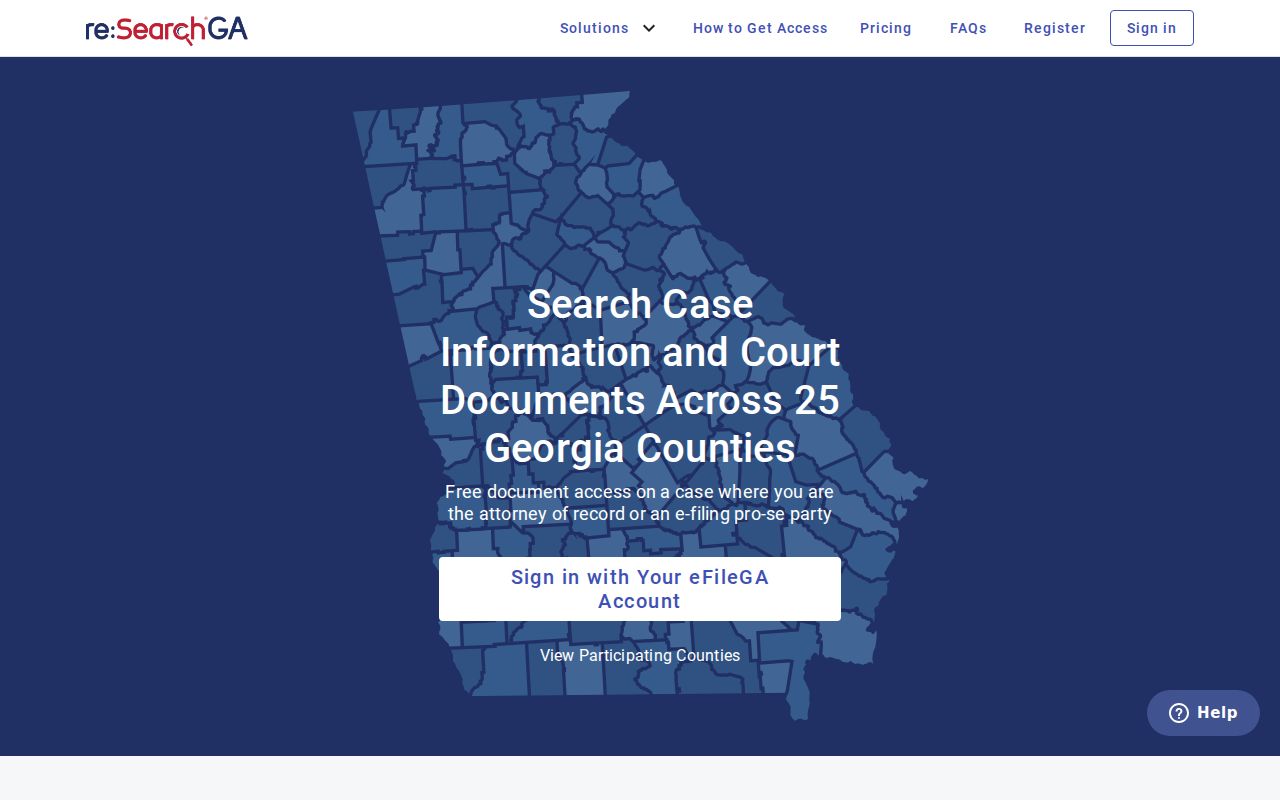
The portal can lead to a docket or document, but the named Worth County court and clerk determine the authoritative case record.
What if the portal has no case? Contact the clerk with the case number, person’s court name, and an approximate date. The record may not be online, may sit in a court not covered by the search, or may be subject to an access limit.
Worth Juvenile Record Limits
The Clerk of Courts manages Juvenile Court records, but juvenile matters are not handled as open adult criminal dockets. Access can be limited by law and court rule. A jail or public search should not be used to fill gaps with guesses about a juvenile case. Ask the clerk what process is available to an authorized person.
Other Worth County court material can also be sealed, restricted, redacted, or exempt from public production. Georgia uses the term “record restriction” for a process that can limit access to eligible arrest information. It is often called expungement in ordinary speech, but Georgia restriction does not mean that every agency record is destroyed.
The Georgia Courts record-restriction resources explain the process. The source page is shown below for users trying to understand why a prior record may not appear. Review the official self-help material before drawing a conclusion.
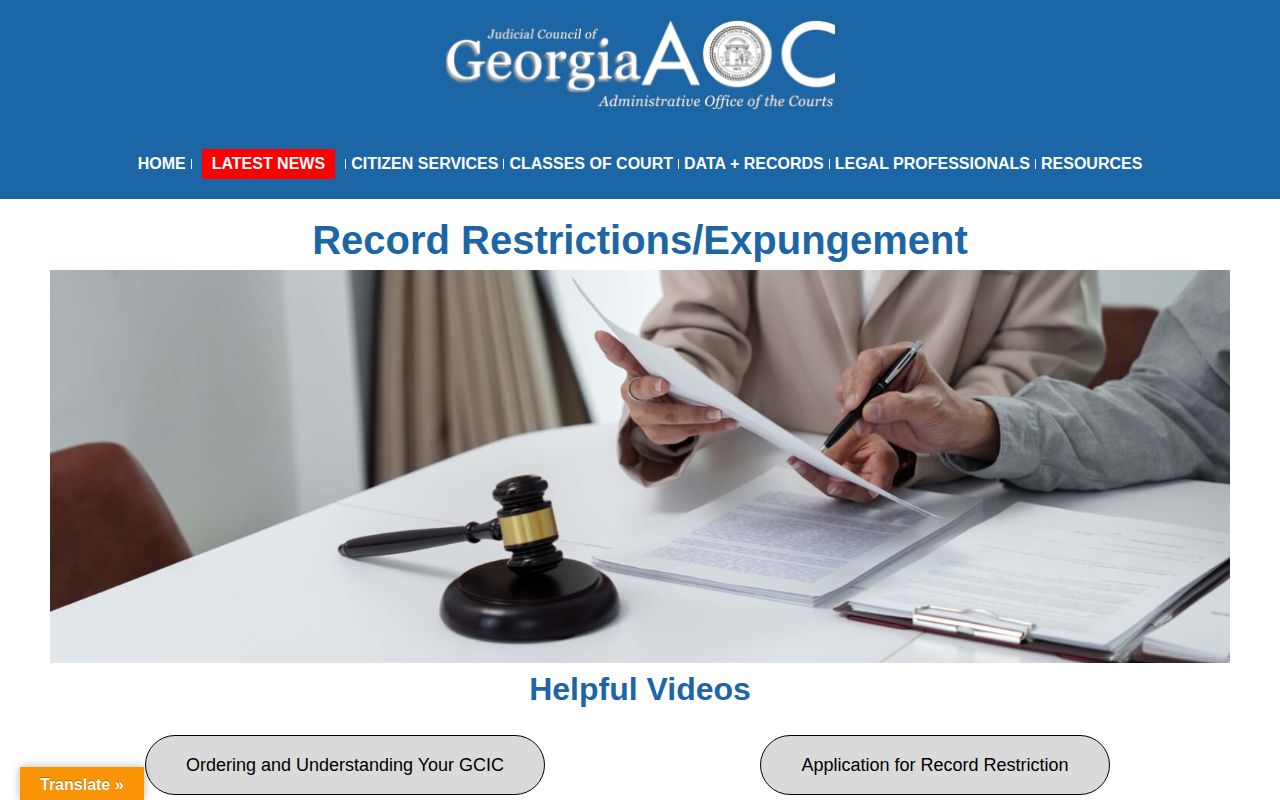
A restricted result does not change the need to verify current custody with the agency that holds the person.
Worth Court and Jail Records
The cleanest release confirmation uses both record types. Begin with the Worth County jail database to identify the booking, court, charges, bond, and release field. Then use the court case number to locate the docket and order. If the two sources appear out of sequence, ask the jail for the actual release record and ask the clerk for the filed order. Processing time can explain a gap between the signed order and physical departure.
The sheriff’s open-records page routes written jail-record requests to openrecords@worthcosheriff.com. A request can seek the booking record, release date and time, release reason if maintained, and destination on transfer. Georgia’s public-record process may yield the record, a timetable, a cost estimate, or a lawful basis for withholding within the required response framework.
The Worth County released inmate search covers the full custody chain. Court records belong in that chain as legal confirmation, not as a substitute for Current Inmates, previous-inmate release fields, GDC, BOP, or ICE status.
Note: The court order and jail release record answer different questions, so retain both when the exact legal basis and custody date matter.
Worth Court Release Outcomes
Terms in a docket can be brief. Bond permits release under set conditions while the case can remain open. Dismissal ends the named charge but may not resolve other cases. Probation is a court sentence served in the community under stated terms. Revocation is a court action that can change or withdraw that community status. Remand means the court sends the person into custody or back to a lower court, depending on context.
- Disposition
- The formal outcome recorded in a case.
- Sentence completion
- The point when the ordered term has been satisfied.
- Probation
- Court-ordered community supervision rather than parole from state prison.
- Revocation
- A court decision changing supervision after an alleged or proven violation.
- Remand
- An order sending a person to custody or sending a matter back for more proceedings.
Read the whole docket sequence. A later order may modify an earlier bond or sentence. For felony probation or parole supervision after release, Worth County is served by the Georgia Department of Community Supervision Tifton field office. DCS can help with supervision status, but it is not a jail custody list and does not replace the court’s filed order.
Public Record Search
Sponsored Results